

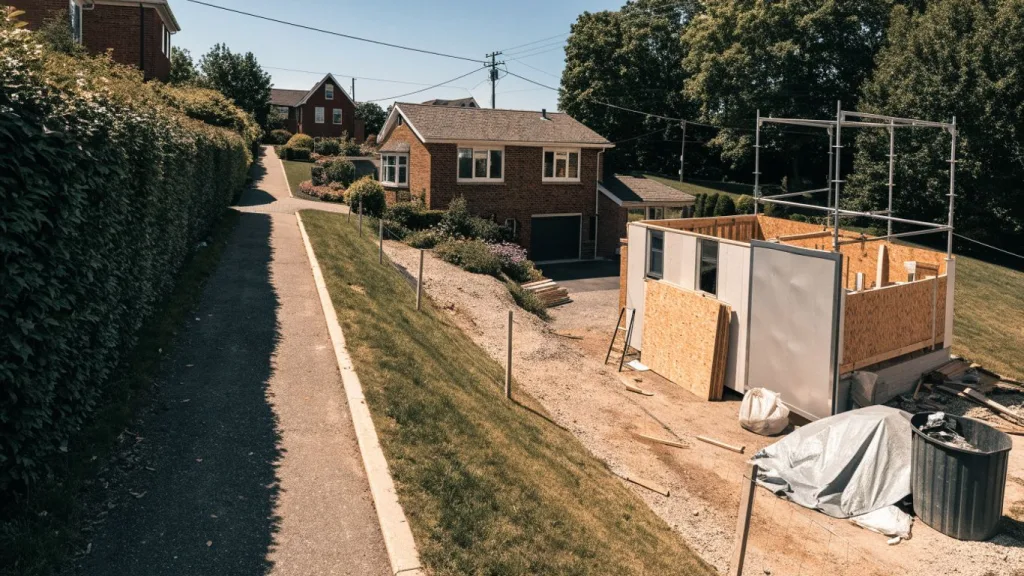
Building a laneway or garden suite means working in very little space, and the right construction bin rental keeps debris from taking over the site. Toronto allowed laneway suites as-of-right in 2018 and garden suites in 2022, and the city has since released free pre-approved designs to help homeowners build them, according to CBC News. Whether you hire a builder or book the bin yourself through our residential bin rental service, this guide explains what waste these builds produce, which bins suit each stage, and how to get a bin to a tight site, based on the projects we deliver to across Toronto and the GTA.
Here is the short version:
- Separate clean soil and concrete from mixed construction debris before loading.
- Estimate waste by weight as well as volume, because a compact load can still be heavy.
- Check truck access, overhead clearance, and the bin’s location before delivery.
- Plan bin swaps around trades, deliveries, and inspections instead of waiting for overflow.
- Assign one person to book the bin, confirm costs, and keep the waste plan current.
Bylaws and requirements vary by municipality and can change. Confirm current rules with your local municipality before booking.
What Waste Does a Laneway or Garden Suite Build Actually Produce?
Laneway and garden suites typically range from about 500 to 600 square feet, according to CBC News. A small footprint does not mean a small waste load, because the debris changes character at every stage, which is why a flexible bin rental Toronto plan works better than one single booking. Early work brings out old structures, paving, and plants. Excavation brings soil and concrete. Framing and finishing bring offcuts, drywall, roofing scraps, and packaging. Planning for that sequence works better than guessing at a single total.
Demolition and Site-Prep Debris
Before construction starts, many yards need a shed removed, fence sections taken down, old paving broken up, or plants cleared. This material is usually a mix of wood, metal, broken masonry, and green waste, which suits a standard mixed-waste bin. If you plan to salvage fixtures, lumber, or stone, pull them out before demolition begins. Once reusable material is mixed with broken debris, it is difficult to recover.
Framing, Drywall, Roofing, and Finishing Waste
Once the structure goes up, waste shifts to lumber offcuts, drywall pieces, roofing scraps, protective wrap, and product packaging. Finishing trades add smaller scraps in repeated bursts as they install and trim materials. Our 10 Yard bin has a double-door design, so crews can walk in to load rather than lifting every piece over the side, which saves time on a compact site. Keep clean, reusable offcuts apart from material headed for disposal, so it is easy to see what is actually ready to go.
Excavation, Soil, and Concrete: Why Clean Fill Matters on Suite Builds
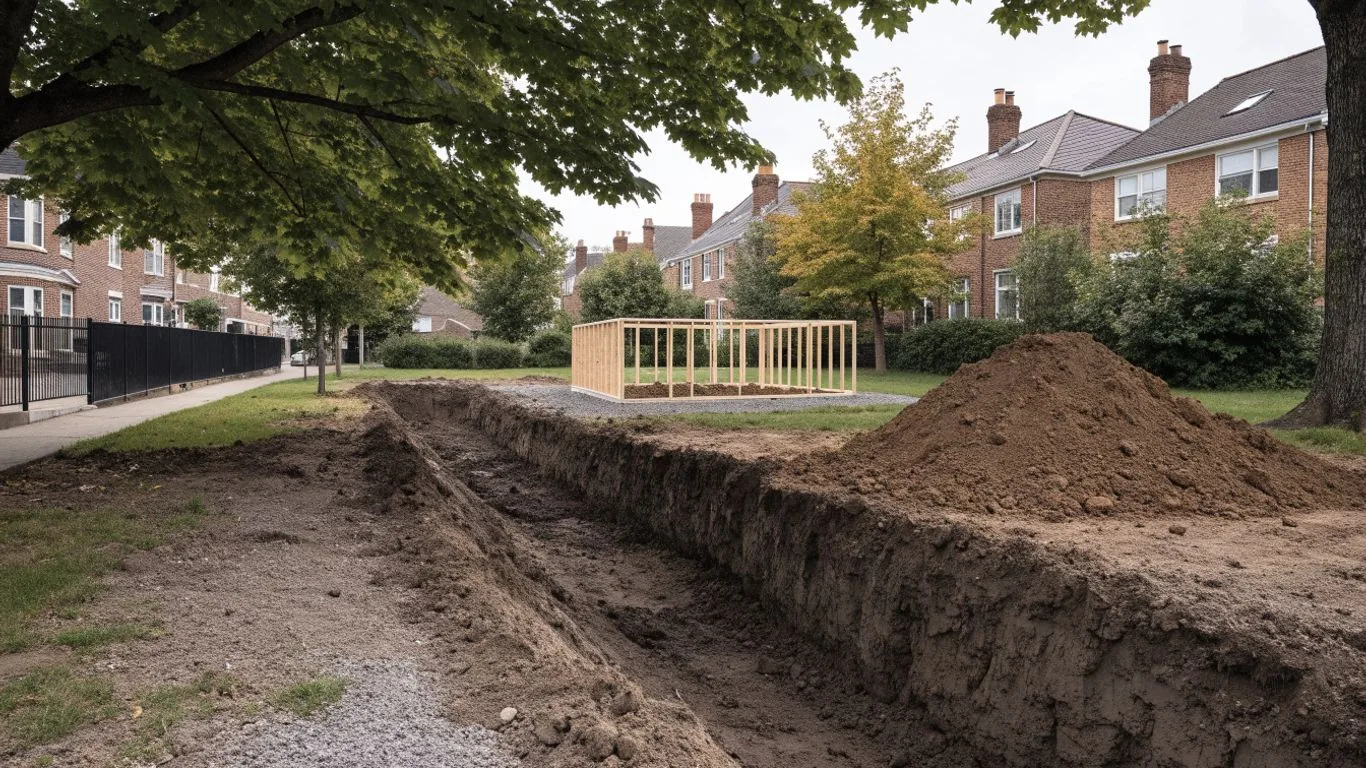
Excavation can produce a large volume of material before the visible building work has advanced very far. Soil leaving a construction project in Ontario is covered by the province’s On-Site and Excess Soil Management regulation, made under the Environmental Protection Act. How those rules apply to your project depends on its scope, so ask your builder or excavation contractor to confirm the soil plan before digging begins. What we can tell you from the bin side is that clean material and mixed debris should never share a container.
Foundation, Footing, and Servicing Trench Spoil
Footings, foundations, and utility trenches create spoil, and the quantity depends on the design, ground conditions, and depth of the work. Some soil may be reused on the property if the team has planned for it. The rest needs a destination, and that decision should be made before the first shovel goes in. We often see homeowners assume that the builder’s quote includes disposal, only to find out at the excavation stage that it does not. Ask directly who is responsible.
Weight is the other common surprise. Broken footing concrete is dense, and a handful of loads can reach a bin’s weight allowance while the container still looks half empty. This is why concrete, asphalt, and dirt belong in a dedicated bin and not in a mixed one.
Clean Fill Bin vs Mixed Garbage Bin
Our Clean Fill bin is a 5 Yard bin at $359 per load, for concrete, asphalt, or dirt only. Mixing other material into it defeats its purpose. Our standard bins are for mixed construction waste.
| Clean Fill bin | Mixed garbage bin | |
|---|---|---|
| What goes in | Concrete, asphalt, or dirt only | Construction material, roofing, demolition debris, drywall, wood framing, yard waste |
| Mixing rule | No mixing with other material | Not for clean fill streams |
| Sizes | 5 Yard | 5, 10, 14, and 20 Yard |
| Best used | Excavation and foundation stage | Demolition, framing, and finishing |
If soil ends up mixed with household waste, drywall, or other debris, stop loading and call us before adding more. Correcting a mixed load later is far harder than separating it from the start.
How Much Waste to Plan For, Stage by Stage
Ask your builder and trades to estimate waste for each phase, then update the estimate when the design or scope changes. As a general pattern, demolition and excavation create fast, heavy loads, while framing and finishing produce lighter, bulkier material over a longer period. Our guide to choosing a construction bin size covers sizing in more depth.
Matching Bin Size to a Small-Footprint Build
The bin has to fit the debris and the space you have for delivery and loading. Our 5 Yard bin measures 12′ x 6′ x 2′, and its low sides make hand loading easy where space is tight. The 10 Yard measures 12′ x 6′ x 4′, and the 14 Yard measures 12′ x 6′ x 4.5′. The 20 Yard, at 14′ x 7′ x 6′, is our largest standard bin. For a compact suite, the 10 and 14 Yard sizes are usually the practical starting point. A 20 Yard makes sense mainly when your staging area allows it and your builder expects a surge of debris.
Weight vs Volume: Where Overage Charges Come From
Each bin includes a weight allowance for its one-week rental: 5 Yard at $299 includes 1 ton, 10 Yard at $379 includes 1.5 tons, 14 Yard at $439 includes 2 tons, and 20 Yard at $499 includes 2.5 tons. Weight above the allowance is $120 per ton. Dense material such as soil, masonry, and concrete reaches the limit well before the bin looks full, while light packaging fills the space without adding much weight. Our bin rental cost guide explains how to avoid overage by matching the bin to the material.
Getting a Bin to a Laneway or Backyard Site
Delivery can be as challenging as estimating the debris, especially when the suite sits behind an existing home. A truck needs a safe route to the placement point, and the bin must stay accessible without blocking workers or neighbours. Walk the route before booking and note the tightest turns, overhead obstructions, gates, and surfaces that could be damaged. Share those details with us when you book so we can plan the delivery around them.
Narrow Laneways, Overhead Wires, and Truck Access
A narrow approach limits where a truck can turn or position itself, and wires or branches can affect clearance. Measure gates and tight passages, and check whether parked vehicles or other construction deliveries could block the route on delivery day. We often see a suite site where the only workable spot is a short side-yard run, and in that case a 5 Yard bin is frequently the better fit than a larger one that cannot be placed at all. If the truck cannot reach the planned location safely, agree on an alternative spot before dispatch.
Backyard Garden Suites: Side Yards, Gates, and Protecting Landscaping
A backyard may be reachable only through a side yard, a narrow gate, or a route that crosses lawn or paving. Consider the ground condition, the turning space, and how workers will carry debris to the container. Where needed, our team places protective boards under the bin to reduce damage to surfaces. Mark any landscaping you want protected, and keep access routes clear of stored materials.
Where the Bin Can Sit: Driveway vs Public Laneway
A bin on your driveway or other private property generally avoids the permit process, and it often gives crews the most direct path to the work area. A public laneway may look convenient for a rear build, but placing a bin on public property can require municipal permission, and rules differ by city. Do not assume a public space is available for a private bin. Our guide to bin rental permits in Toronto explains when a permit applies and how to avoid needing one. For the building permit side of your project, the City of Toronto publishes an application guide for new laneway suites.
Homeowner-Managed vs Contractor-Managed Waste
Waste arrangements work best when responsibility is settled before construction begins. Depending on your contract, the builder may include debris removal, or you may be expected to arrange some or all of it. Either approach can work, but overlapping assumptions leave a full bin without a scheduled pickup, or a delivery arriving before the site is ready. Put the arrangement in writing, and revisit it if the scope changes. Our post on renovation bin rental disputes shows how unclear responsibility causes problems.
Who Orders and Pays for the Bin
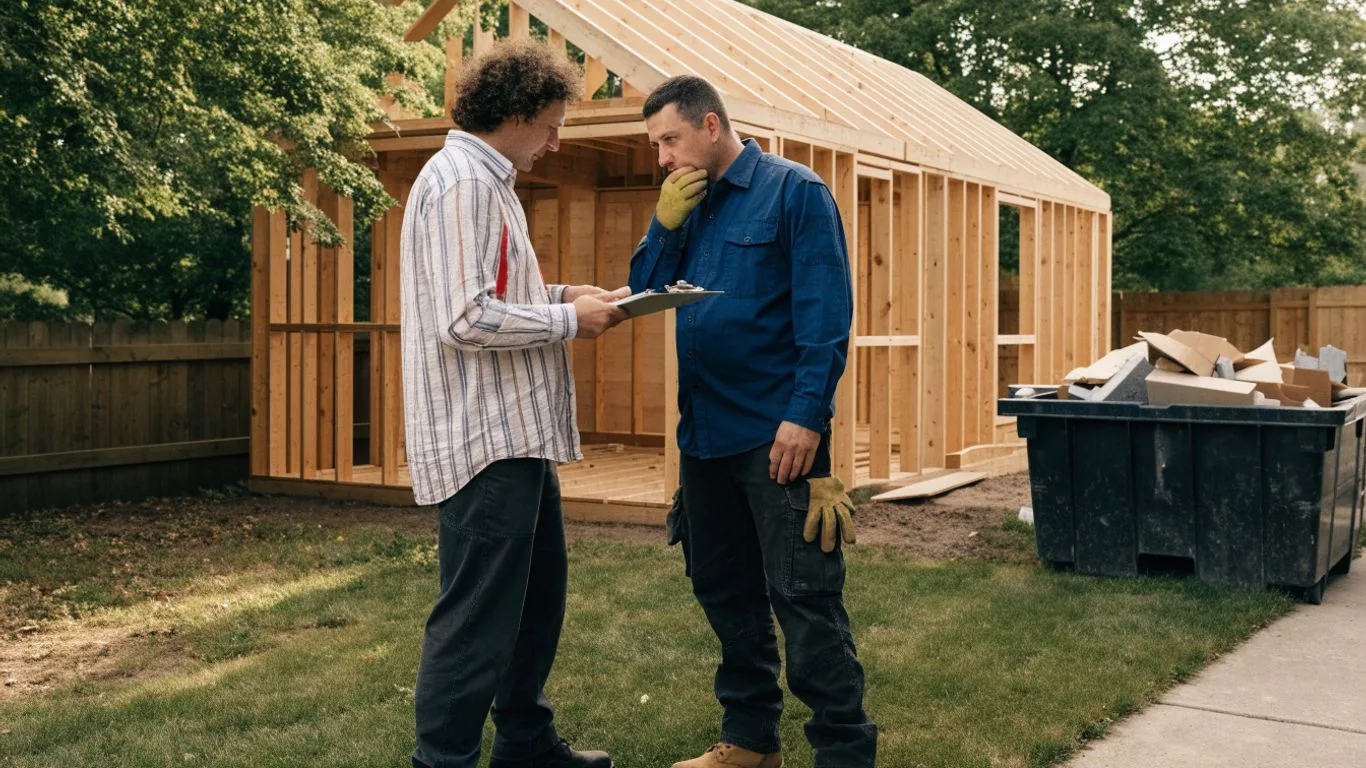
Agree on who contacts us, who approves extra charges such as the $120 per ton overage, and who requests a swap or final pickup. If the contractor manages the service, clarify whether it covers every stage or only routine construction debris. If you manage it, agree on who shares quantity estimates and delivery windows with you. Keep the account details, material restrictions, access notes, and schedule in one place so that whoever makes a change can see the current plan.
Scheduling Bin Swaps Around Your Build Timeline
A swap is easiest to arrange when it follows the work sequence instead of becoming an emergency after the bin fills. Excavation and demolition tend to fill a bin quickly, while framing and finishing fill it more slowly. Ask the builder to flag likely peaks, and leave room in the schedule for weather and shifting trade dates. Tell us as early as you can, and we will confirm what notice we need for your date and address.
Coordinating Swaps With Trades and Inspections
Trade work and waste service share the same limited access space, so timing a swap means looking beyond how full the bin is. Check the work calendar for concrete placement, material deliveries, inspections, and days when the truck route must stay open. A pickup that looks convenient on its own can conflict with a delivery that needs the only usable access lane. Coordinate the request with the builder or site lead before confirming a time, and let us know if a trade runs late so we can adjust.
Keeping the Site Safe and Tidy During a Backyard Build
A tidy waste area makes a compact site safer to move through. Keep debris away from entrances and walkways, and do not let loose scraps build up around the bin. Check the area at the end of each workday, especially after demolition or cutting, and never load material above the top of the bin’s sides. If the bin is nearing its limit, request a pickup or swap instead of piling higher. One person on site should own these checks, so small problems do not turn into blocked access.
Conclusion: Planning Your Suite Project’s Waste With Rent A Bin
A smooth waste plan for a laneway or garden suite starts with knowing what each stage will produce, separating clean fill from mixed debris, and confirming access before the bin arrives. Set clear responsibilities, line up swaps with the build calendar, and adjust as quantities change. We deliver across Bolton, Brampton, Caledon, Etobicoke, Markham, Mississauga, North York, Vaughan, and Richmond Hill, and we can help you choose the right bin before you order. Tell us about your site layout, the stage you are starting with, and what you expect to remove, then request a quote online or call us at (416) 702-2467.
Frequently Asked Questions
What waste does a laneway or garden suite build produce?
The mix changes by stage. Site preparation produces old structures, paving, and plants. Foundations and trenches produce soil and concrete. Framing and finishing produce lumber offcuts, drywall, roofing scraps, and packaging. Soil and concrete go in a Clean Fill bin, and everything else goes in a mixed-waste bin.
Can soil and concrete go in the same bin as construction debris?
No. Our Clean Fill bin is a 5 Yard bin at $359 per load, for concrete, asphalt, or dirt only, with no mixing. Our 5, 10, 14, and 20 Yard bins are for mixed construction waste. If a load gets mixed by accident, stop loading and call us before adding more.
What bin size do I need for a laneway or garden suite?
It depends on the stage and the space available. For a compact suite, the 10 and 14 Yard bins are usually the practical starting point, and the 5 Yard works well where access is tight. The 20 Yard makes sense only when your staging area allows it and your builder expects a large surge of debris.
Do I need a permit to put a bin in a public laneway?
A bin on your driveway or private property generally avoids the permit process. Placing a bin on public property can require municipal permission, and the rules differ by city, so confirm with your municipality before booking. Do not assume a public laneway is available for a private bin.
What happens if my bin goes over the weight limit?
Weight above the included allowance is charged at $120 per ton. Allowances are 1 ton for the 5 Yard, 1.5 tons for the 10 Yard, 2 tons for the 14 Yard, and 2.5 tons for the 20 Yard. Dense material such as concrete and soil reaches the limit quickly, which is why heavy material should go in a Clean Fill bin.
Who should book and pay for the bin, me or my builder?
That depends on your construction contract. Agree in writing on who orders the bin, who approves extra charges, and who requests swaps and the final pickup. Settling this before construction starts prevents a full bin sitting without a scheduled pickup.